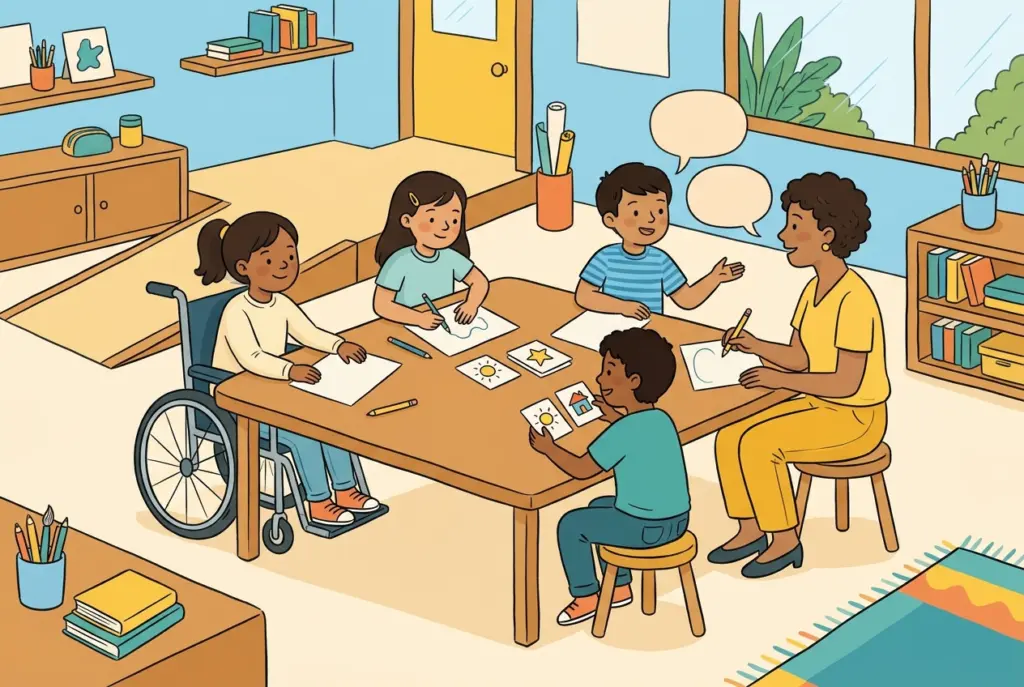
Before changing a classroom routine in response to assessment results, make one small decision: ask students how they experienced the task. Their responses can give you questions to investigate alongside their answers and scores. This is a practical way to bring student voice into decisions about learning.
The supplied TeacherToolkit commentary on interpreting PISA rankings raises questions about who participates, how much effort pupils report and what governments can reasonably claim from results. Its discussion concerns international assessment. The classroom routine proposed here is our suggested application of those questions, rather than an intervention evaluated by the source.
The commentary is dated September 2026. Its specific claims about PISA 2025 require checking against the underlying reports before being used in school communications.
One useful distinction in the commentary is between a position in a ranking and a change in attainment. A country may move up because others perform worse. The author also highlights differences between participating and non-participating pupils, and cautions against treating an association as proof that a policy caused a result. Together, these points invite a more careful question: what does this evidence allow us to conclude?
Apply that question to one familiar classroom task. Choose an existing reading response, explanation or problem-solving activity. Keep its learning purpose clear, then add a brief opportunity for students to describe what helped them demonstrate their understanding and what got in the way.
You could offer these prompts:
- Which part of the task let you show your understanding most clearly?
- Was there a point where you understood the idea but found it difficult to give your answer?
- Were any instructions unclear?
- What would you keep or change for the next task?
Present these as requests for information, with no preferred response. Avoid asking students to explain a disappointing class score or defend how hard they worked. The source raises effort as an interpretation question, but explicitly says the analysis does not establish that reduced effort explains declining performance. A teacher should leave room for uncertainty too.
Adapt the response method to the students taking part. As a suggested starting point, offer a short written response, a private conversation, or a simple selection followed by an optional explanation. Read the prompts aloud where useful, and allow thinking time. Ask students which response method they would find easiest to use. Check whether the feedback routine itself creates a barrier to participation.
Then read the feedback alongside the work. Suppose several students identify an unclear instruction. You might revise that instruction for the next comparable task and invite feedback again. This is a proposed classroom response, not evidence that wording caused the original results. Keep track of the question you are investigating and avoid promising that one change will improve scores.
Before deciding, also consider whose views you have heard. Invite students who have not responded to contribute privately if they wish. Do not assume that those who speak first represent everyone, or that a missing response means agreement.
Close the feedback loop with a concrete explanation: identify the change you will try, why students’ responses informed it, and when you will review it together. Ask whether the proposed adjustment addresses the difficulty they described. Student participation becomes more meaningful when learners can see how their contributions enter a decision and can question that decision afterward.